

- Hardwood Flooring
Hardwood Grain Patterns: Understanding The Beauty And Characteristics
May 22, 2025

When selecting hardwood flooring, one of the most significant aesthetic considerations is the hardwood grain patterns. These natural variations in the wood’s appearance are created by the way the tree grew and how the lumber was cut.
Understanding the different types of hardwood grain patterns can help you choose flooring that aligns with your desired style and appreciate the unique beauty of natural wood. This comprehensive guide will explore the common hardwood grain patterns and their characteristics.
The Origin of Hardwood Grain Patterns
The hardwood grain patterns we see in flooring are a direct result of the tree’s growth rings and the way the log is sawn at the mill. Growth rings are formed annually as the tree adds new layers of wood. The contrast between the denser, slower-growing wood of the late season and the softer, faster-growing wood of the early season creates the visible lines and figures we call grain.
The angle at which the saw blade intersects these growth rings during the milling process determines the specific hardwood grain patterns that will appear on the surface of the planks.
3 Wood Sawing Methods That Influence Wood Floor Grain Patterns
The three primary sawing methods that influence grain patterns are:
Plain Sawn (Flat Sawn):
This is the most common and cost-effective sawing method. The log is cut parallel to the growth rings, resulting in planks with a cathedral pattern on the face. This pattern is characterized by a series of inverted “V” or flame-like shapes. Plain sawn wood is generally more prone to cupping and warping than other cuts.
Quarter Sawn:
In this method, the log is first quartered, and then each quarter is sawn perpendicular to the growth rings. This produces planks with a more linear and consistent grain pattern, often featuring ray flecks (medullary rays) that appear as shimmering ribbons or flakes across the grain, particularly prominent in oak. Quarter sawn wood is more dimensionally stable than plain sawn.
Rift Sawn:
Similar to quarter sawn, rift sawing aims to cut perpendicular to the growth rings, but with a slightly different angle (typically between 45 and 60 degrees). This method produces the most consistent and linear grain pattern with minimal ray flecks. Rift sawn wood is the most dimensionally stable and often the most expensive due to higher waste during milling.
Common Hardwood Grain Patterns and Their Characteristics
Based on the sawing methods, several distinct hardwood grain patterns are commonly found in hardwood flooring:
Cathedral Grain (Plain Sawn)
- Appearance: Characterized by a prominent, arched pattern in the center of the plank, resembling a series of cathedrals. The grain lines are typically wide and varied.
- Sawing Method: Plain sawn (flat sawn).
- Characteristics: This is the most common and often the most dramatic grain pattern. It showcases the natural variations in the wood’s growth rings. Plain sawn wood tends to be less stable and more susceptible to movement with changes in humidity.
- Popular in: Rustic, traditional, and casual interior styles where the natural character of the wood is desired.
Linear Grain (Quarter Sawn & Rift Sawn)
- Appearance: Features straight, parallel grain lines running along the length of the plank. In quarter sawn wood, ray flecks may be visible as shimmering, ribbon-like figures perpendicular to the grain. Rift sawn wood has the straightest grain with minimal to no ray flecks.
- Sawing Method: Primarily quarter sawn and rift sawn.
- Characteristics: Linear grain patterns offer a more uniform and consistent look. Quarter sawn wood is known for its stability and the unique visual interest of ray flecks, especially in oak. Rift sawn wood is the most stable and provides a clean, contemporary aesthetic.
- Popular in: Modern, contemporary, transitional, and Arts and Crafts interior styles. Quarter sawn oak is particularly popular in Craftsman and Mission designs.
Swirl or Figured Grain
- Appearance: Displays irregular, swirling patterns, knots, and other unique figures in the wood. This can include burls, bird’s eye, and curly grain.
- Sawing Method: Can occur in various sawing methods depending on the specific figure. Often found in plain sawn pieces that intersect interesting growth patterns.
- Characteristics: Swirl or figured grain patterns are highly unique and add significant character to the flooring. They are often prized for their visual interest and can be more expensive due to their rarity.
- Popular in: Accent areas, feature walls, or in designs where a strong, individualistic statement is desired.
Mixed Grain
- Appearance: Some hardwood flooring products may intentionally include planks with a mix of different grain patterns, such as cathedral and more linear grains.
- Sawing Method: Typically involves a combination of sawing methods or careful selection of planks from different parts of the log.
- Characteristics: Mixed grain flooring offers a balance of natural variation and a degree of uniformity. It can be a good compromise for those who appreciate the character of plain sawn but desire some of the stability of other cuts.
- Popular in: Various interior styles, depending on the specific mix of grain patterns.
Understanding Wood Species and Grain Patterns
The type of wood species also significantly influences the appearance of the grain pattern. For example:
Oak (Red and White): Known for its prominent grain, with distinct cathedral patterns in plain sawn and noticeable ray flecks in quarter sawn.
Maple: Features a tighter, more subtle grain pattern that can range from linear to slightly curly. Ray flecks are less pronounced than in oak.
Hickory: Displays a strong, varied grain pattern with significant color variation between the heartwood and sapwood.
Cherry: Has a smooth, closed grain that can develop a rich patina over time. Plain sawn often shows subtle cathedral patterns.
Walnut: Exhibits a rich, dark color with varied grain patterns, including both straight and figured appearances.
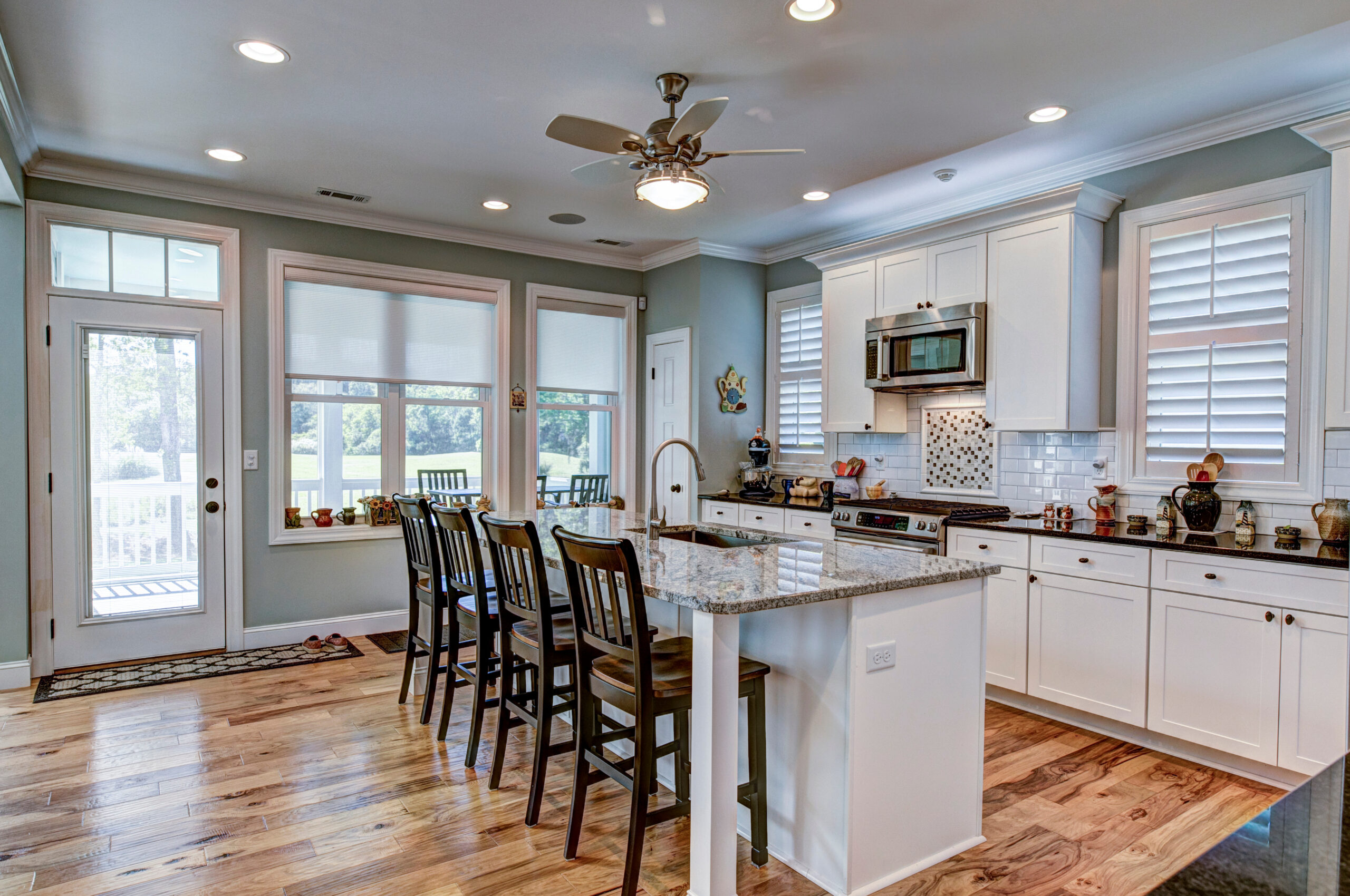
Choosing Hardwood Grain Patterns for Your Space
When selecting hardwood flooring based on hardwood grain patterns, consider the following:
- Overall Style: Do you prefer a more traditional and characterful look (cathedral grain), a clean and uniform aesthetic (linear grain), or something unique and eye-catching (figured grain)?
- Room Size: More pronounced grain patterns can be visually busy in smaller rooms, while linear grains can help create a sense of spaciousness.
- Light Levels: The way light reflects off different grain patterns can affect the overall look of the floor.
- Personal Preference: Ultimately, the best choice is the grain pattern that you find most appealing.
Appreciating the Natural Artistry of Wood with National Floors Direct
Hardwood grain patterns are a testament to the natural beauty and unique characteristics of wood. Understanding the origins of these patterns in the tree’s growth and the milling process allows for a more informed appreciation of your hardwood flooring.
Whether you are drawn to the dramatic arches of cathedral grain, the clean lines of quarter or rift sawn, or the captivating figures of burl or curl, the choice of hardwood grain patterns plays a crucial role in the overall aesthetic and feel of your space. Contact National Floors Direct to explore our collection of hardwood flooring. We Bring the Store to Your Door℠. We are a direct-to-consumer carpet & flooring specialty service. We’ll visit your home or office with samples from all of the leading brands in the industry. You can see what they look like in your space, with your lighting, and your furniture. Our flooring professionals will help you choose the products that best fit your needs and then measure and price the job. With National Floors Direct, you get instant, accurate estimates on an incredible catalog of carpet, hardwood, laminate, and luxury vinyl flooring products.
You Might Also Like
-
- Buyer’s Guide
- Hardwood Flooring
July 28, 2025
Fabulous Flooring: The Best Wood Flooring Trends In 2020
-

-
Get Your
FREE
In-Home
Flooring Estimate